She Had No Symptoms. Trusting Her Instincts Led to a Breast Cancer Diagnosis at 32.
Brittany Balderamma was enjoying a stress-free evening at home after finishing her shift as a CT technologist at Methodist Germantown Hospital. She went through her social media feed, exploring content about visiting London and Paris—her dream vacation. She was scrolling through TikTok and laughing at memes.
Two days later, she was sitting in an oncologist’s office, frantically researching the life expectancy of a 32-year-old with breast cancer. She had no idea what stage of breast cancer she had or if it had spread to any other parts of her body.
Brittany had a notepad full of questions but struggled to keep up with the whirlwind that had suddenly taken over her life. Appointments, phone calls, and decisions came one after another. She barely had time to process the diagnosis before she was asked to consider treatment options.
One moment she was healthy and symptom-free. The next, her world had been turned upside down.
Being diagnosed with breast cancer was a complete shock.
She had no family history, and she wasn't experiencing any symptoms. In fact, what led to her diagnosis wasn't a breast concern at all.
During a routine visit, Brittany casually mentioned an area near the bottom of her armpit that she wanted her OB-GYN provider to evaluate. Her provider recommended imaging and referred her to the Methodist Comprehensive Breast Center Midtown location.
An ultrasound confirmed the area of concern was a lipoma, or benign fatty tissue. But during the exam, the radiologist noticed something else.
An abnormal area was identified closer to the breast.
A mammogram revealed an area of concern in the upper outer portion of her right breast, and a biopsy was recommended by the radiologist.
Five days later, a nurse navigator from Methodist Le Bonheur Healthcare called Brittany while she was at work.
Standing in an empty stairwell to take the call in privacy, she heard the nurse on the other end of the phone tell her that she has cancer.
She burst into tears.
Her first instinct was to call her mother. Then she turned to the people she saw every day: her coworkers.
Brittany tipped off one of her colleagues a day or two earlier, letting them know she was expecting a call about her biopsy. Brittany told her it was probably nothing, but she wanted someone to know, just in case.
When the colleague saw Brittany crying, she immediately knew what happened.
This colleague had faced breast cancer herself and immediately offered Brittany reassurance, advice, and support.
When Brittany tried to share the news with the rest of her coworkers, she could barely speak.
"Do you want me to tell them?" her colleague asked.
Brittany nodded through tears.
"We're with each other 40 hours a week, so they're your family away from home," Brittany said. "Everybody was kind of panicking because here I am just crying, and I couldn't even get the words out."
In the days that followed, Brittany worked to understand what came next.
Rather than relying solely on information she found online, she reached out to people who could relate to what she was experiencing. She called a close friend who worked at the Breast Center and a college friend who had also been diagnosed with breast cancer at age 32.
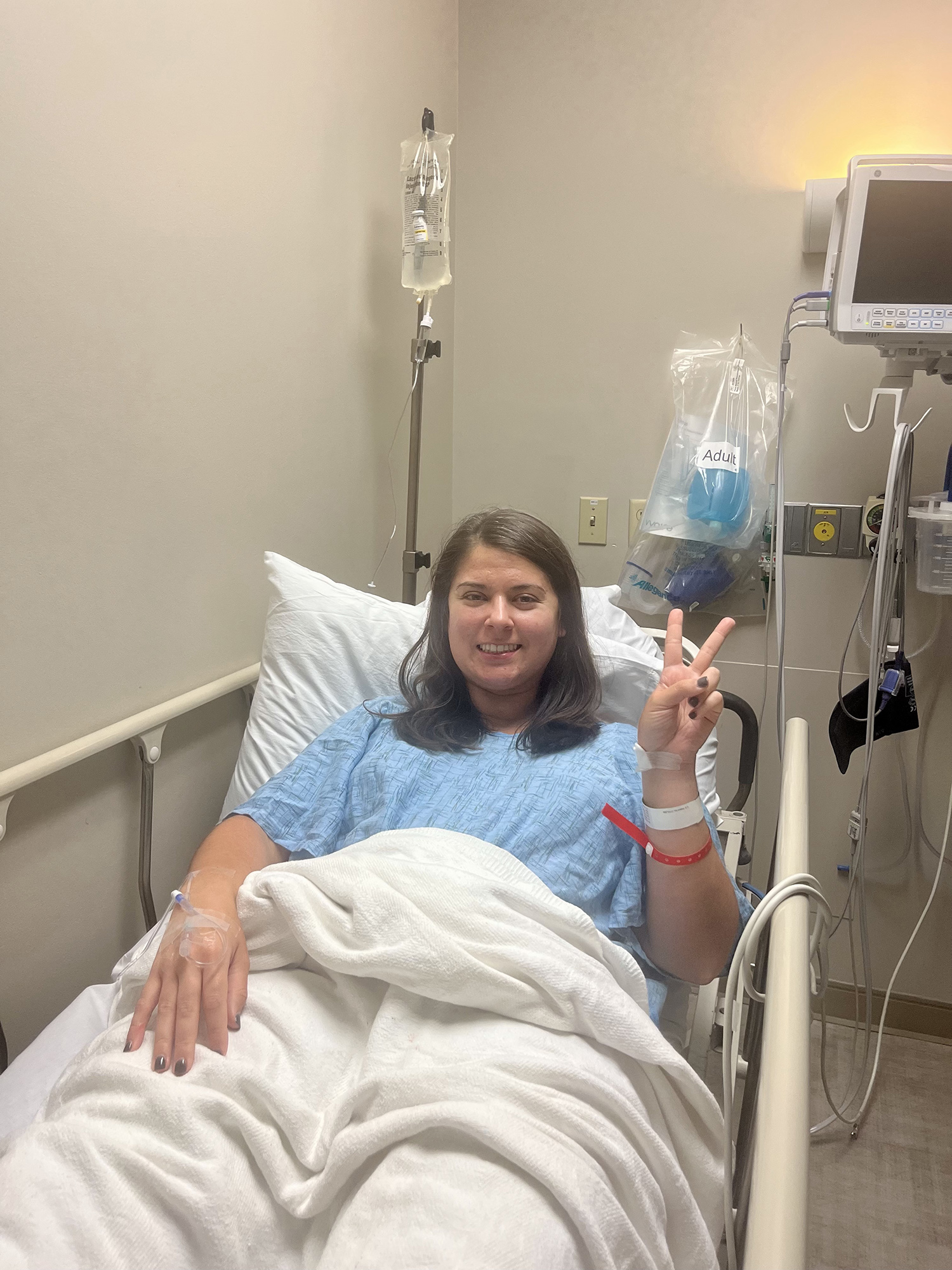
"Everybody's journey's different, but it was nice having that person," Brittany said. "It was nice having someone to ask questions and learn from."
Fortunately, Brittany soon received encouraging news.
Because the cancer had been found early, it was classified as Stage 1 and had not spread to other organs. Genetic testing also showed she did not carry inherited genetic markers that would increase her risk for certain cancers.
Even with that positive news, major decisions had to be made quickly.
Her provider outlined several treatment options, including a lumpectomy with radiation, a single mastectomy or a double mastectomy.
After carefully considering her options, Brittany chose to undergo a double mastectomy with reconstruction.
"A lot of it had to do with peace of mind for myself, being a 32-year-old," she said. "Given my age and my fear of recurrence, that's what made sense for me."
The decision was personal and one she made after thoughtful conversations with her care team and loved ones.
Throughout treatment and recovery, Brittany leaned heavily on her support system. Her mother temporarily moved in with her to help as she recovered and regained her strength. Friends, family members and coworkers were there every step of the way.
Today, Brittany is now celebrating nearly 3.5 years of being cancer-free.
She continues endocrine therapy as part of her treatment plan and attends regular follow-up appointments, but she remains deeply grateful that her cancer was discovered when it was.
Most of all, she's thankful she trusted her instincts enough to start a conversation with her provider.
She also hopes other women understand the importance of talking with their doctors about concerns and following recommended screenings.
"I know there's a lot of misinformation out there now with TikTok and Instagram and everything, but mammograms are your number one gold standard," she said. "If something doesn't seem right, tell your doctor about it, because if I had not mentioned that to my doctor, who knows what it would be in three years. I still might not even know."
Brittany's experience ultimately inspired her to take her career in a new direction.
After learning so much about breast imaging during her own cancer journey, she pursued certification in mammography and joined the team at the Methodist Comprehensive Breast Center in Germantown.
Today, she helps patients navigate many of the same emotions, questions and uncertainties she once faced herself.
"I want to go help women like the women here helped me," she said.
Whether she's celebrating good news with a patient or providing encouragement during a difficult moment, Brittany understands the impact compassionate care can have because she's lived it.
For her, what began as an unexpected diagnosis became a reminder that listening to your body, speaking up and having conversations with your doctor can make all the difference.
To learn more about the importance of breast cancer screenings, visit https://www.methodisthealth.org/healthcare-services/womens-health/breast-health/.
To schedule a mammogram at one of our five locations, call 901-516-9000 or 901-516-9000 in Mississippi.